Most people treat Split as a transit city.
They arrive by plane or ferry, spend a night or two, walk through Diocletian's Palace, eat somewhere on the Riva, take a day trip to an island, and leave. The itinerary is ticked. Split is done.
I understand this. When you have two weeks to see a country and a long list of places, two nights in any city feels like a reasonable allocation. Split has the Roman palace, the Riva, Marjan Hill and the beach. You've seen it.
But many of my guests in the last 10+ years also had no difficulty staying just in Split for 5 nights or even longer. The numerous day trip and boat trip options can easily fill any 5-7 night stay. You can either go by yourselves, join organized tours or even create your own private tours. But there is a third way to experience Split in a truly Croatian manner.
Split has never failed to surprise me even though I have lived here for more than fifteen years. I don't even have to look particularly hard. Split keeps revealing itself at its own pace. The Roman mosaic next to the restaurant F-terminal on the promenade Riva wasn't there when I first arrived — it was discovered, by accident, years later, under the city's surface. A few years ago, a Roman stable was unearthed next to the Silver Gate, which made perfect sense once you thought about it: the Silver Gate was the military entrance, used by Roman soldiers who would naturally have kept horses nearby. Last year, a previously unknown door was found in the east wall of the Palace. Nobody yet knows what it was for.
An ancient city gives you never-ending surprises. You only need to stay long enough to know about the existing ones or even find your own.
This is a piece for the traveller who has decided — or is considering — to stay somewhere properly. Five nights minimum. A week if possible. Using one city as a base rather than a waypoint. It is not a comprehensive guide. It is an invitation to a different kind of trip.
Before the tourists arrive, before the cruise ships dock, before the day organises itself around schedules and obligations, there is a window of time in Split that belongs to nobody in particular.
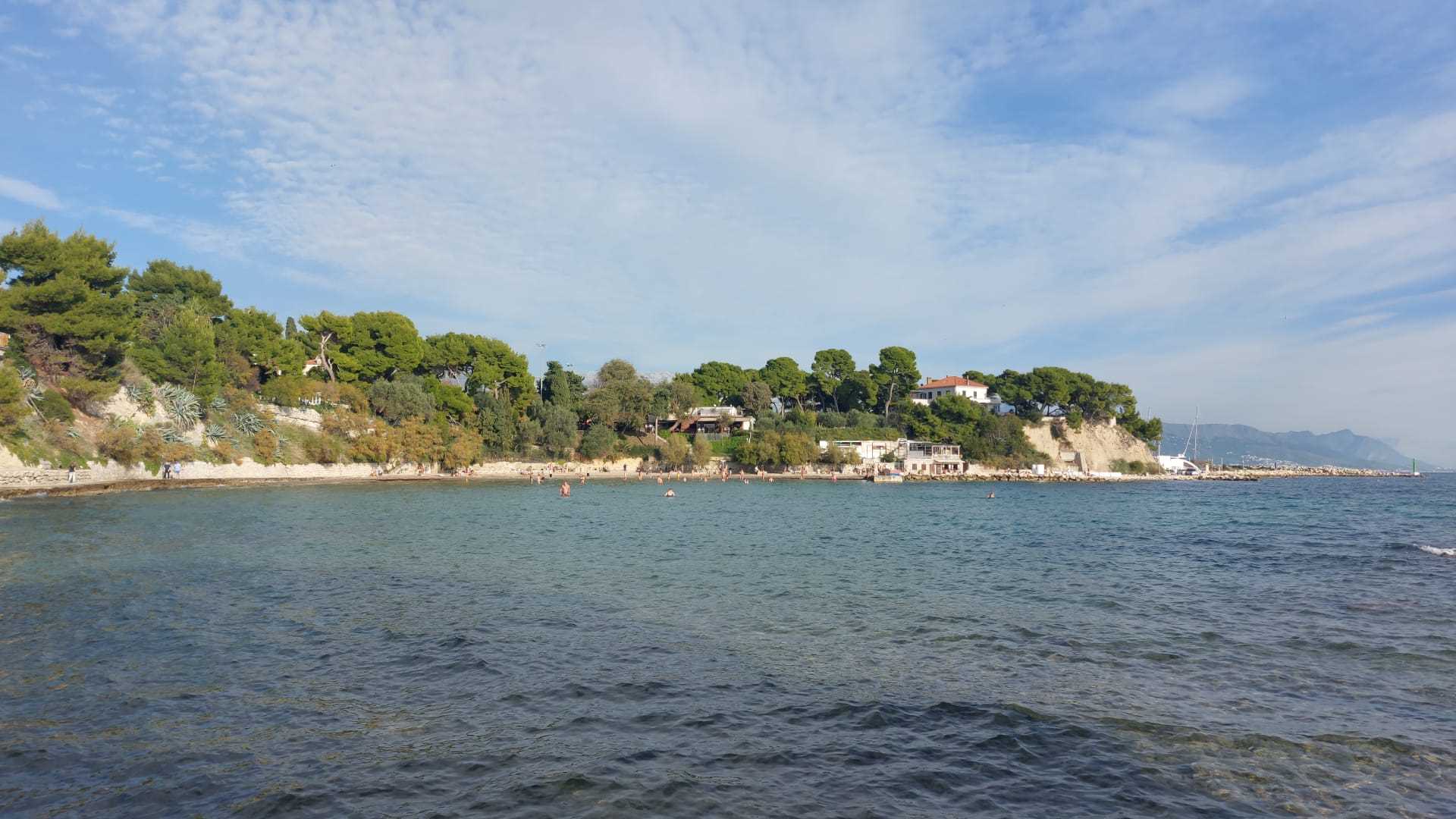
Start at Bačvice and walk east along the coast. Through Firule, through Ženta, all the way to Znjan if you have the energy. The sea is calm at this hour. The light is early and flat and honest. Local people walk their dogs, swim before work, sit with coffee at the small cafés that open before anything else does.
The beaches are empty in the way that things are empty before they are claimed. By ten o'clock they will belong to summer. At seven, they are still genuinely yours.
This walk — unhurried, directionless, stopping when something is interesting — is one of the most Dalmatian things you can do. It is also the best possible introduction to a city that rewards slowness. You'll understand and appreciate why the locals often say "Tko to može platit" or "Ko ovo more platit" - the Dalmatian expression for "priceless".
Marjan Hill is another option, but do it correctly. The mistake is to attempt Marjan in the middle of the day in summer. I had a conversation once, before I moved here, with a traveller who had been to Split and mentioned that the heat had been too much to climb Marjan. She was right about the heat. The Riva in full afternoon sun, before you even reach the hill, is genuinely punishing.
But Marjan in the early morning is something else entirely. The air is fresh, cooled overnight. The sea wind comes through the trees. If you are fortunate, there are squirrels. The city is below and quiet and the light on the water is the kind of thing that stays with you.
Marjan sits on the western edge of the city, which makes it equally perfect for sunset. The hill faces the open sea to the west — on a clear evening, the sun drops directly into the Adriatic from the viewpoints above, and the light on the water and the islands in the distance is extraordinary.
The hill at dawn, or at sunset, and the hill at two in the afternoon are not the same place. Most visitors only ever see the last one.
Visitors to Split pay an entrance fee to see the Cathedral of Saint Domnius — Sveti Duje — as a monument. And it is worth seeing as a monument. But there is another way in, and it costs nothing.
Mass is held on Sunday mornings at 8am, and on weekdays at 7:30am. Anyone can attend.
The building is one of the smallest working cathedrals in the world. It was built, originally, as a mausoleum for the Emperor Diocletian — the same emperor whose palace surrounds it, and who was responsible for some of the most systematic persecutions of Christians in Roman history. After his death, his mausoleum was converted into a Christian church. The man who killed Christians is buried, in a manner of speaking, inside a cathedral. This is Split in miniature: history folded over on itself, nothing quite what it first appears, centuries layered so densely that you can barely see the joins.
Sitting in a sacred space more than 1,700 years old, looking at the original Roman motifs overlaid with the Christian altar, participating in a ritual that stretches back two millennia — it is very difficult not to feel something. The magic is in the compression of time and space: the ancient and the living occupying the same breath, the same stone, the same morning light. For many people, it is also the moment when "divine presence" makes itself felt — not announced, not performed, simply there.
You do not need to be Catholic to experience this. You do not need to understand Croatian. You need only to be still.
You will eat well in Split almost regardless of what you choose. But there are a few things worth seeking out specifically, and one of them cannot be rushed into.
Peka is a method of slow cooking — meat and vegetables placed under a bell-shaped lid and buried in embers, left for hours. The result is something extraordinary: falling-apart tenderness, concentrated flavour, the taste of patience. It has become well known among tourists, and you will see it on many menus.
But peka is not a dish for one person. It never was. It requires advance notice — usually at least a day ahead — and the standard minimum portion is for four people. Four Croatian people, which is to say: a substantial quantity of food by any measure. It is a communal meal, designed for a table of friends and family, for a long afternoon of eating and drinking and talking and laughing. You cannot order it on arrival. You cannot eat it quickly. The meal is not decoration for the occasion. The meal is the occasion.
If you are passing through for two nights, peka is not really accessible to you in any meaningful sense. If you are staying a week, it becomes possible to find the right place, give the right notice, gather the right people, and eat the way this food was designed to be eaten.
Dalmatian tripe, prepared in the local style, is another thing worth trying. So are frog legs, which appear occasionally on menus and surprise most visitors. None of these are tourist foods, exactly. They are local foods that happen to be available to visitors who are staying long enough to find them.
Thirteen kilometres north of Split, above the city on a rocky pass between two mountain ranges, sits a fortress that most visitors know from a television programme.
Klis Fortress was a filming location for Game of Thrones. This is the least interesting thing about it.
The fortress has been continuously fortified for over two thousand years. Illyrians built the first stronghold here. Romans followed, calling it Clausura — the origin of the later name Clissa, and today's Klis. Croatian kings held it. The Ottoman Empire wanted it badly enough to spend twenty-five years trying to take it.
It was known as the Key to Dalmatia. The reason is obvious the moment you stand there. The pass between the Kozjak and Mosor mountains was the only viable route between the Dalmatian coast and the interior of Croatia. Whoever held Klis controlled that route. The fortress is inaccessible from three sides — built on a ridge of rock that drops away almost vertically. You can look down from the walls and understand, immediately and physically, why this place mattered.
The most extraordinary chapter of Klis is its resistance against the Ottoman Empire. Captain Petar Kružić and his Uskoks — fierce Croatian irregular fighters — held the fortress for over twenty years against Ottoman armies that vastly outnumbered them, sometimes with only three hundred defenders against thousands of attackers. In 1537, the Ottomans launched their largest assault yet, surrounding the fortress with an estimated ten thousand troops. Kružić was killed in the final desperate attempt to relieve the siege. The fortress fell. It remained under Ottoman rule for one hundred and eleven years before Venice recaptured it in 1648.
Kružić became a national hero. The siege became a national myth. Standing on the walls of Klis, looking out over the mountains and the distant sea, knowing something of what happened here, is a genuinely moving experience.
Do not leave without eating. The lamb roasted on a spit near the fortress — whole, slow-turned over open fire, the way it has been done here for centuries — is as much the reason to come as the history. Going to Klis without eating the lamb is, I will say plainly, a mistake you will regret.
Football in Croatia is not a hobby. It is closer to a theology — a system of belief, identity, community and passion that organises significant portions of people's emotional lives.
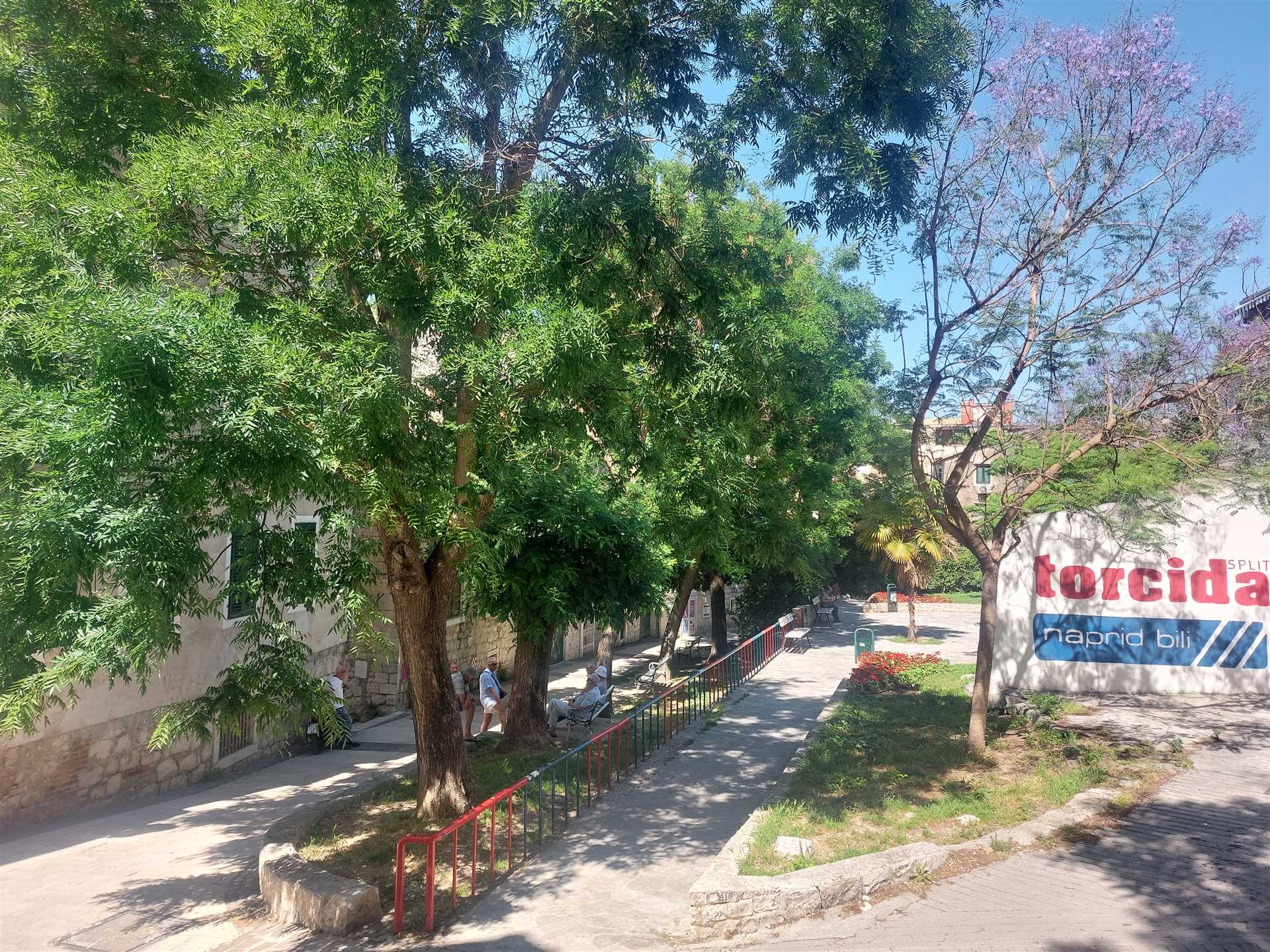
In Split, the club is Hajduk. The supporters' group is Torcida, one of the oldest and most famous ultras groups in European football. The atmosphere at a Hajduk match, particularly at home, is unlike most sporting events you will attend anywhere.
I hosted two Polish guests recently who flew to Split specifically, for two nights, to attend a Hajduk match, exchange souvenirs and interact with local Torcida. They had no other itinerary. The match was the entire point. They left happy in the specific way that only people who have done something slightly mad and entirely worth it can be happy.
If there is a Hajduk match during your stay, go. It does not matter whether you follow Croatian football or any football. What you will witness is a city expressing something essential about itself — the noise, the colour, the specific intensity of a place that takes its football seriously in the way that only places with something larger at stake truly do.
If you have spent any time near Diocletian's Palace, you have probably heard klapa — traditional Dalmatian a cappella singing, performed by small groups in the Palace vestibule, the domed space that once served as the emperor's private entrance. The acoustics are extraordinary. The music is genuinely beautiful. It is also, by now, a reliable feature of the tourist experience. For true klapa lovers, the highlight is always the Klapa Festival held in Omiš every July.
Split is truly a city which adores and honours musical heroes like the late Oliver Dragojević and Vinko Coce. No other event showcases the proud musical tradition better than the Split Festival.
The Split Festival used to be a two-day popular music competition with deep roots in the city's identity — one of the oldest music festivals in Croatia, dating back to the Yugoslav era. The whole Croatia enjoys the festival on live TV too. We are going to see a completely new Split Festival in 2026. It will become a 3-day musical event with international musicians, to be held in September instead of July.
The Split Summer Festival is something larger and longer: a month-long programme of multicultural events including opera, ballet, classical concerts and theatre, many performed outdoors all over Split, including the Palace itself. The opening programme is traditionally a performance of Verdi's Aida in the Peristyle — the ancient Roman courtyard at the heart of the Palace, under the open sky. It is one of the most extraordinary settings for opera anywhere in the world.
I tell every summer guest to look up the programme of the Split Summer Festival when they arrive. This is not something organised for tourists. This is something Split does for itself, and visitors are welcome to join.
There are always concerts at the City Concert Hall (Hrvatski Dom), in the stadium at Gripe, in local bars or even restaurants for those willing to look beyond the obvious venues. This summer, a music school held its graduation concert at Sveti Duje — young students performing in one of the oldest spaces in the city, for an audience that included families and strangers and anyone who walked in.
These things do not appear in guidebooks because they are not designed for tourists. They are the city living its life. The week-long visitor has time to encounter them. The two-night visitor does not.
There is a Dalmatian concept that has no direct translation into English. The closest approximation is a state of blissful, suspended idleness — not laziness exactly, not boredom, but a kind of deliberate and pleasurable disengagement from the obligation to be doing something. The locals call it fjaka.
It is not something you can schedule. It is not an activity. It cannot be experienced between a morning kayaking tour and an afternoon cooking class. It requires time, and warmth, and the absence of any particular place to be.
A traveller who gives Split a week has a chance, somewhere in the middle of it, to accidentally arrive at fjaka — sitting at a café on the Riva with no plan for the next hour, watching the sea and the boats and the people, feeling the sun without urgency, and realising that this is, in fact, enough. More than enough.
This does not happen in two nights. Two nights is not long enough to exhaust the itinerary, let alone to get past it.
Two nights in Split is perfectly fine. You will see the Palace, walk the Riva, swim at Bačvice, eat well. You can put a tick next to Split on the travel wishlist.
But if you have the time and the inclination to stay longer — five nights, a week — the city has more to offer than any two-night itinerary can accommodate. It can also go beyond a well planned 5 or 7 day itinerary deep diving into all the day trips and boat tours imaginable.
That version of Split is available to anyone. You just need to give it the most precious thing in the world - time and immerse yourself in the true Dalmatian way of "pomalo": to pause, breathe, and enjoy the moment.
This is the fourth piece in a series on travelling Croatia slowly. The first — One Croatia Trip Is Never Enough — Here's How to Savour the Journey — covers regions, seasons and transport. The second — Dalmatia at Your Own Pace — Using Split as Your Base — covers day trips and overnights from Split. The third — On and Off the Beaten Path — A Realistic Route Through Croatia — offers a framework for covering Croatia's main corridor.
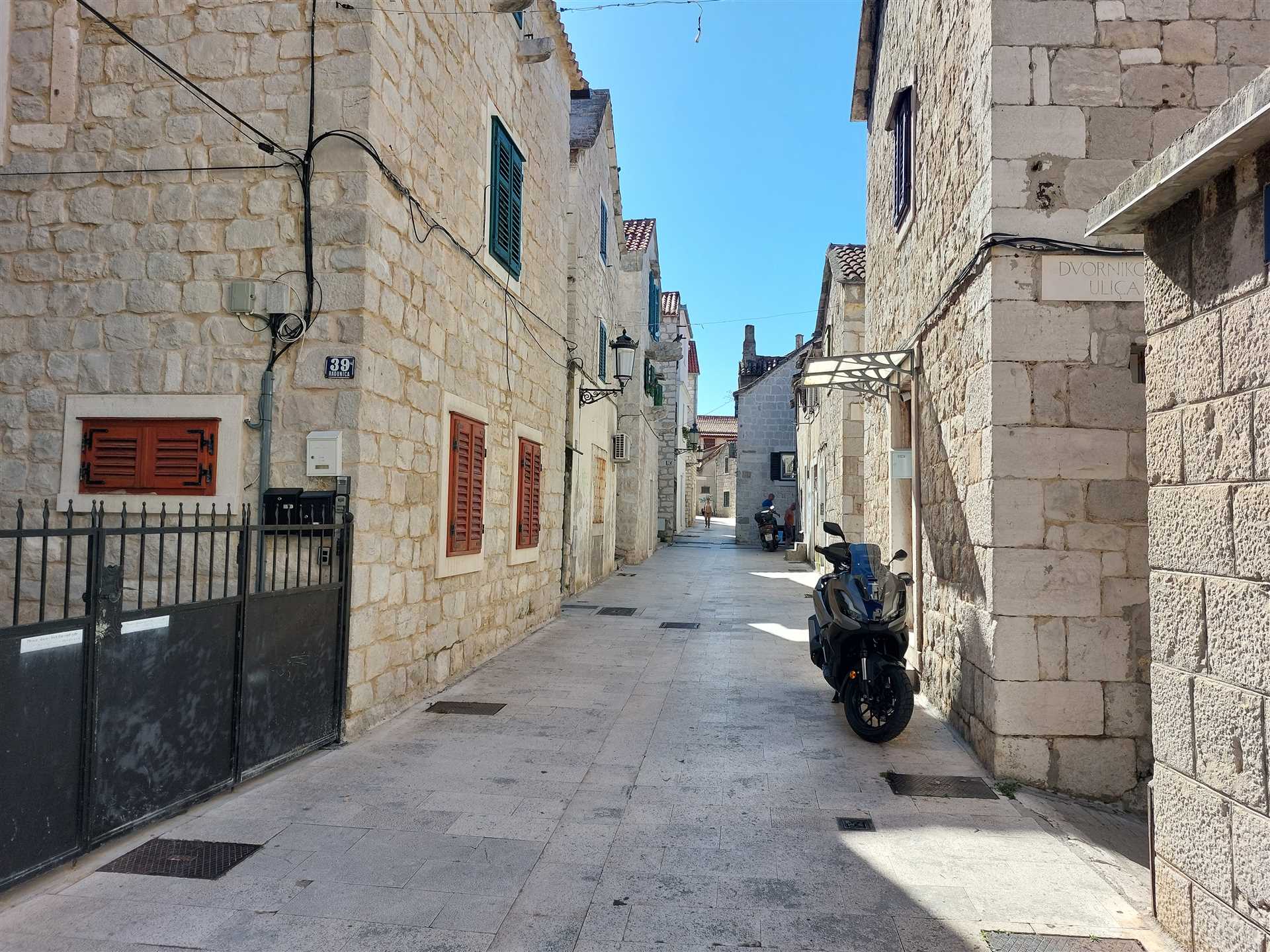
Valeria Teo has lived in Split's Radunica neighbourhood for over 15 years and holds Croatian citizenship. She operates 3 Flowers Holiday Rentals — rooms and apartments in central Split. If you are planning a longer stay and would like advice on making the most of it, she is a WhatsApp message away. threeflowerssplit.com