Every summer, I watch the same thing happen.
A traveller arrives in Split having spent three days in Dubrovnik, two in Hvar, one in Zadar, and is leaving tomorrow for Plitvice before flying home from Zagreb. They have covered the country. They have seen the highlights. They also find out later that there is so much more.
Croatia is a small country, both in terms of population and geographical size. The country is diversified and abundant in landscapes at the same time. Everything is reachable, but not everything is reachable quickly, and not everything reveals itself to someone passing through on a schedule. The traveller who spends two weeks racing from highlight to highlight leaves having collected photographs. The traveller who spends the same two weeks in one region leaves having been somewhere.
I have lived in Split for over fifteen years. I still have not finished Dalmatia. There are wine roads on Pelješac I haven't driven, villages in the Dalmatian hinterland I haven't found, islands I've visited once and promised myself I'd return to. If you are planning your first trip to Croatia and hoping to cover the whole country in ten days, I want to gently suggest a different approach.
This is not a metaphor. The geographic and cultural differences between Croatia's regions are substantial enough that they genuinely feel like separate places.
Istria in the northwest is Mediterranean and central European simultaneously — Italian influence everywhere, hilltop towns that could be Tuscany, olive oil and truffles and Malvazija wine, a place that owes more to Trieste than to Dalmatia.
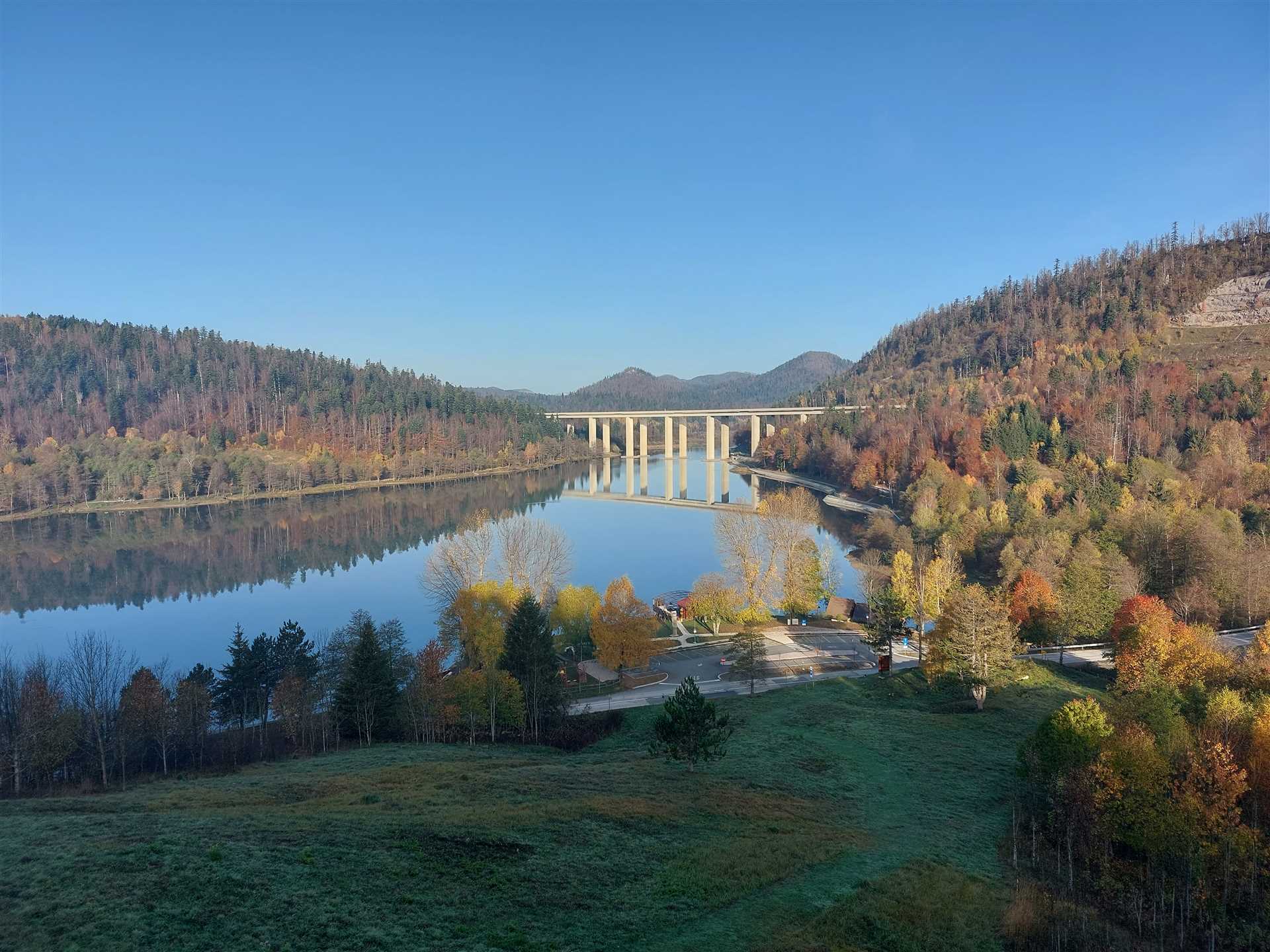
Gorski Kotar and Zagorje in the interior are something else again — dense forests, castle towns, rolling vineyard hills, the closest thing Croatia has to mitteleuropean countryside. Risnjak National Park here is home to wolves, bears and lynx and receives a fraction of the visitors that Plitvice does. Varaždin in the north is Baroque and refined, an entirely different Croatia from the coast.
Dalmatia is the longest region — stretching from Zadar in the north to Dubrovnik and beyond in the south, with Split roughly in the middle. It takes at least a full trip to cover it properly, possibly two. The islands alone could absorb a month.
Slavonia in the east — flat, agricultural, wine-producing, a mix of Central European, Ottoman and Austro-Hungarian influences — is a Croatia that most coastal visitors never see at all, and is entirely different from everywhere else.
Each of these deserves its own trip. My suggestion, especially for first-time visitors, is to choose one and do it properly. You can always come back. And if you savour Croatia the first time, you will come back.
The conventional answer is May–June or September–October for shoulder season. This is broadly correct but needs context.
Summer (July–August) is peak season for good reason — the weather is reliable, everything is open, and the Adriatic is at its most beautiful. It is also when Croatia receives a disproportionate percentage of its annual visitors. The ratio of tourists to locals in coastal towns in August is genuinely startling. Split, a city of around 170,000 people, receives millions of visitors. The experience of being one of them is real but crowded.
May and early June offer excellent weather with far fewer people. The sea is not yet warm enough for everyone, but the temperatures for walking, hiking and sightseeing are ideal. Everything is open. Prices are lower.
September is arguably the best month. The sea is still warm from the summer, the crowds have thinned, the harvest season is beginning in the vineyards, and the light is extraordinary.
October and November are for a specific kind of traveller — and if you are that traveller, these months are extraordinary. The tourist infrastructure reduces to its local baseline. The prices drop noticeably. The real Croatia emerges. October is perfect for hiking — the temperatures are ideal and the landscapes are at their most dramatic. The grape harvest (berba) runs through October, and vineyards across Istria, Dalmatia and Zagorje welcome visitors during this season. On November 11, St Martin's Day (Martinje) transforms towns and villages across the country into wine celebrations — young must ceremonially "baptised" into wine, feasts, music, tastings. It is one of the most genuinely local events in the Croatian calendar and almost unknown to foreign visitors.
A note on weather expectations: if you are coming from Bergen, London or Edinburgh, Croatia in October is not a weather compromise. It is an upgrade. The concept of "bad weather" is relative. October in Split means 15–22°C, possibly some rain, and dramatic Adriatic light that summer never produces. For a Northern European or British traveller, this is perfectly acceptable and considerably more pleasant than home.
For travellers from Hong Kong or Taiwan: October is genuinely mild — perhaps slightly cool by your standards, but excellent for the kind of active sightseeing, hiking and wine touring that shoulder season enables.
Croatia's public transport is functional and honest. It is not comprehensive, and it is not fast. Here is what you need to know:
Intercity buses connect all major cities reliably. The basic logic is simple: four million Croatians need to commute. Buses run between Split, Zagreb, Dubrovnik, Zadar, Rijeka, Šibenik, Osijek. They are comfortable and reasonably priced. In shoulder season, frequencies reduce but services continue. In summer, book ahead.
Trains are worth knowing about, with clear limitations. The network is centred on Zagreb and was built under Austrian rule to move goods and people in and out of the country — not along the coast. Rail services terminate at Split — there is no onward rail connection to Dubrovnik or other southern coastal destinations. The two useful routes for visitors are Zagreb–Split (6.5 hours by InterCity, scenic through the Karst highlands — one of the more beautiful train journeys in Central Europe) and Zagreb–Rijeka. Train tickets are inexpensive compared to other European countries. For anything south of Split or along the coast, buses and ferries take over entirely. The train network is improving — significant investment is underway — but for now it is a secondary option for most coastal itineraries.
Ferries (Jadrolinija) run year-round to the major islands. In summer they run frequently; in winter they run on a reduced schedule that serves island residents. The islands do not disappear in October — they just become quieter. Check jadrolinija.hr for current schedules.
Seasonal catamarans (Krilo and TP-Line) operate April to October. By November, only essential routes remain. The Split–Dubrovnik catamaran is seasonal. If you are planning to travel between them in November, the bus is your option.
Domestic flights — Trade Air is Croatia's second domestic airline, operating alongside Croatia Airlines. Your description would be a flying minibus — small aircraft, short hops, connecting cities that would otherwise take half a day by road. Trade Air runs scheduled domestic routes between Zagreb and Split, Dubrovnik, Zadar, Pula, Osijek and Rijeka — flight times generally under an hour. Routes and frequencies vary by season; some are year-round, others summer only. For travellers combining, say, Istria with Dalmatia without wanting to backtrack through Zagreb by bus, a Trade Air hop can save significant time. Tickets can be booked through the Croatia Airlines website or directly. Worth checking when planning a multi-region itinerary.
BlaBlaCar is a ridesharing platform well established in Croatia since 2015. Drivers with empty seats post their journeys; passengers book and pay through the app. The most popular routes are Split–Zagreb, Rijeka–Zagreb and Pazin–Zagreb — the average journey is nearly 300 kilometres. Payment is held by the platform and only released after the ride is completed, which provides a reasonable level of security. It is cheaper than the bus on many routes and faster on some. For travellers comfortable sharing a car with strangers — who may be locals, students, professionals going the same direction — it is an excellent option that also tends to produce genuinely interesting conversations.
Private driver arranges all logistics and removes every uncertainty. I have organised this for guests who needed to reach places buses don't serve, or who simply preferred the flexibility. More expensive, but for some routes and some travellers, entirely worth it.
Car rental remains the most flexible option for reaching smaller towns, rural wine estates, and national parks not served by public transport. Croatia's roads are excellent. Rental is straightforward. For anyone planning to explore Istria's hill towns, Pelješac wine roads, or the Gorski Kotar interior, a car opens up what buses cannot.
The honest reality: there is no single correct approach. It depends on where you are going, how much time you have, how much you want to spend, and how comfortable you are with logistics. Most independent travellers use a combination — buses for main routes, BlaBlaCar for specific legs, occasional car rental for nature detours, Trade Air when saving a day of travel is worth the cost.
All eight of Croatia's national parks are open year-round, but with important qualifications:
Open fully, shorter winter hours: Plitvice Lakes, Krka, Paklenica, Northern Velebit, Risnjak. These are all accessible by public transport (Krka particularly easy — bus from Split to Skradin, 1.5 hours). Autumn is arguably the best time for all of them — fewer visitors, dramatic colours, waterfalls at full volume.
With restrictions: Mljet National Park is open in winter (November to March) only by prior arrangement — effectively closed for casual visitors. Kornati is accessible only by private boat or organised tour, with all visitor facilities closed in winter. Brijuni runs reduced winter services.
For travellers based in Split, the most practical parks in shoulder season are Krka (day trip), Paklenica (near Zadar, doable as part of a longer journey), and Risnjak (for those routing via Rijeka). Plitvice is a longer journey from Split but spectacular in autumn and better done as part of the Zagreb route.
Croatia's restaurants are not cheap. The country has a population of four million — there is no economy of scale keeping prices at Thai or Eastern European levels. Eating out in Split or Dubrovnik is broadly comparable to a mid-range Western European city. What shoulder season offers is not lower prices — it is local restaurants. The places locals actually eat, rather than the places designed to serve tourists who will never return. The food may cost the same. The quality, the atmosphere, and the likelihood of the owner sitting down to talk to you are considerably higher.
Similarly, the transport does not disappear in October. It returns to a human scale — the scale of four million people going about their lives, rather than ten million visitors all moving at once. This is, for the right kind of traveller, a relief rather than an inconvenience.
In the blogs that follow this one, I will cover the specifics: using Split as a base for Dalmatia, a suggested route for those determined to cover the whole country, and what October in Split actually looks and feels like from the inside.
But the first decision — the most important one — is which Croatia you want to see. One region, done slowly and properly, will stay with you far longer than a rapid circuit of the highlights. There will always be another trip.
There is no bad version of Croatia. There are only choices made without enough clarity about what you actually want.
This is the first piece in a series on travelling Croatia slowly. The second — Dalmatia at Your Own Pace — Using Split as Your Base — covers day trips and overnights from Split. The third — On and Off the Beaten Path — A Realistic Route Through Croatia — offers a framework for covering Croatia's main corridor. The fourth — What Google Can't Tell You About Staying in Split for a Week — is about staying in Split properly.
Valeria Teo has lived in Split's Radunica neighbourhood for over 15 years and holds Croatian citizenship. She operates 3 Flowers Holiday Rentals — rooms and apartments in central Split, all within walking distance of the ferry port, Diocletian's Palace and Bačvice Beach. For questions about planning a stay in Split or Dalmatia, she is a WhatsApp message away. threeflowerssplit.com