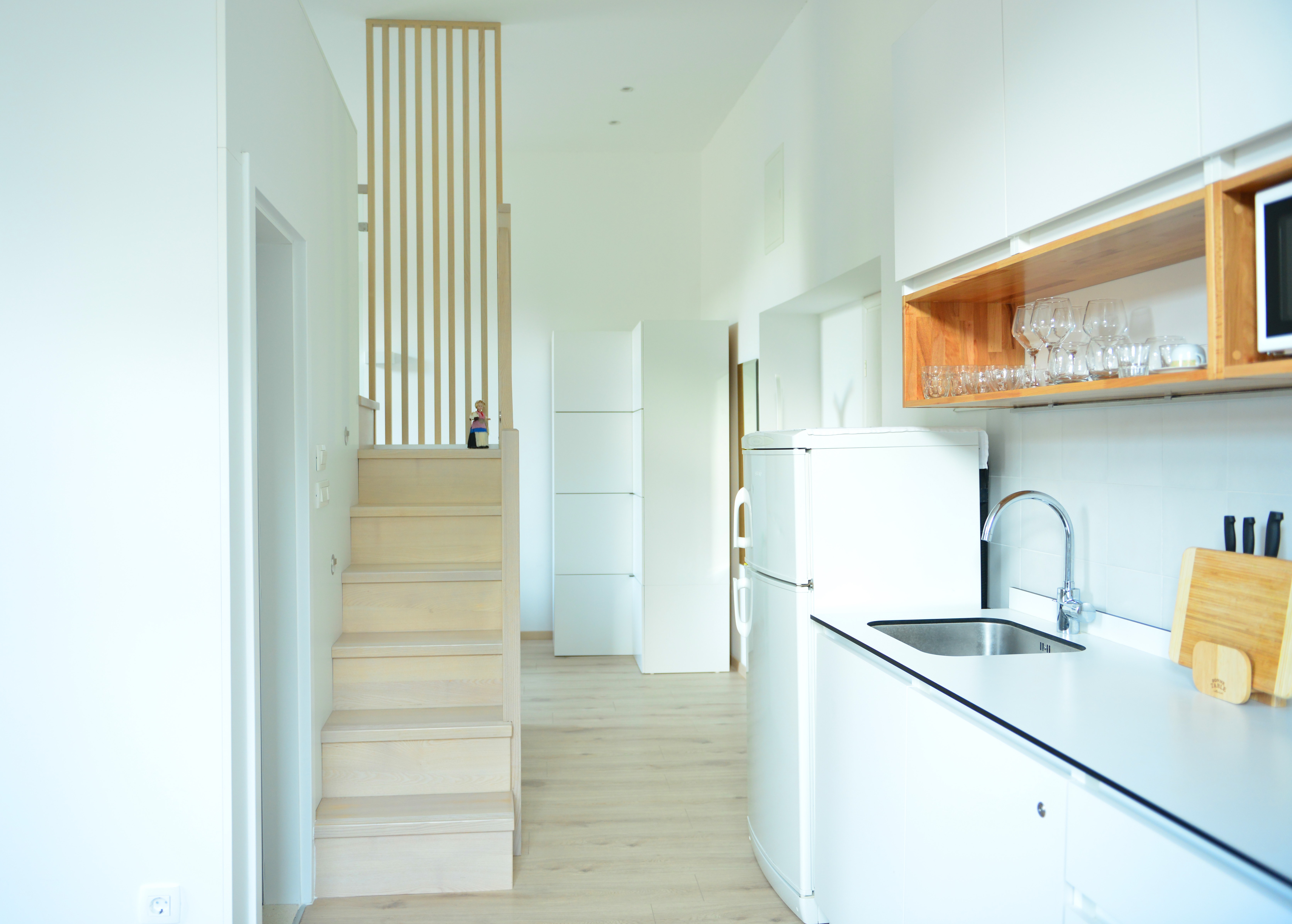
Not long ago, someone posted in a social media travel group asking for accommodation advice in Split. She was travelling with her husband and two young children. She wanted to be near the Old Town but was worried that a self-catering apartment in the centre would lack the amenities of a hotel further out.
The replies were kind and well-intentioned. Some recommended hotels. Some recommended apartments. Some recommended specific neighbourhoods. Everyone gave their own answer to the question she was asking.
Nobody addressed the question she wasn't asking: whether the trade-off she was contemplating was actually the right one. I struggle to think of any amenity a hotel further away from the city center may uniquely offer which I can't find in the city center. Maybe a pool, spa or sauna?
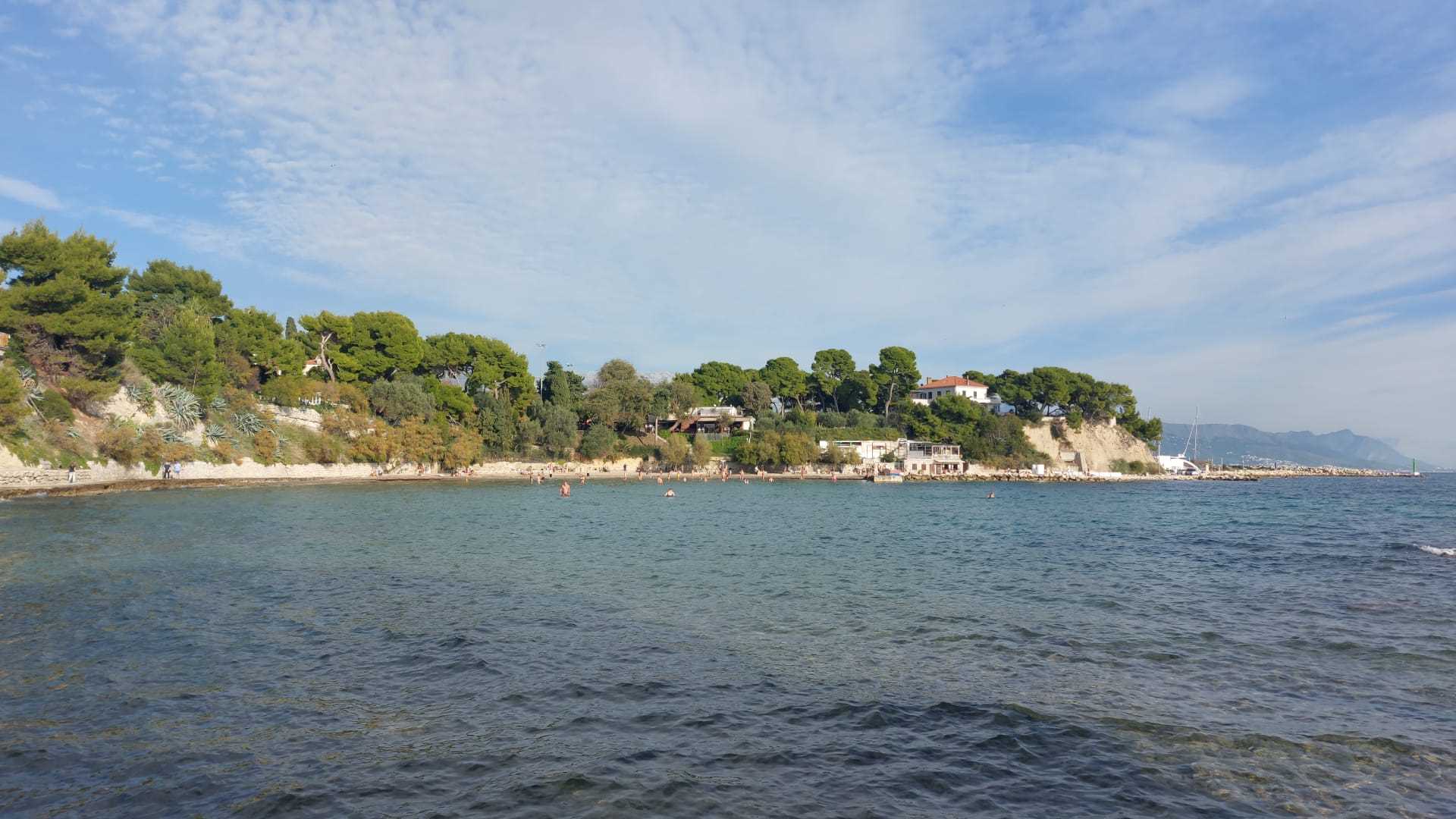
I live in Radunica, five minutes' walk from Bačvice Beach — a shallow, sandy bay that is about as ideal for families with young children as any beach on the Adriatic. Bačvice is not a typical rocky Croatian beach. It is sandy, gently shelving, and has been a place where local families have been bringing their children for generations. My son spent many summers playing there before he learnt how to swim. When I re-watched those videos of him jumping in the waters and laughing like crazy, I genuinely struggled to imagine what a hotel pool offers that Bačvice does not, for a family willing to walk five minutes.
But she didn't know that. Most people booking Split from abroad don't. And that gap between what a place is and what people imagine it to be is where most accommodation mistakes are made.
Finding holiday accommodation is no different from finding a permanent rental or buying a property. There are compromises — unless you are very lucky and all the stars align, or your budget is genuinely unlimited.
Everyone starts with a wishlist: nice décor, good location, sea view, outdoor space — balcony, terrace, garden, quiet neighbourhood, close to the beach, walking distance from the Old Town, spacious rooms, modern kitchen, a pool and etc. And preferably all at a reasonable price.
These things are all possible. They are not all possible simultaneously at a reasonable price. Some combinations are not even possible at any price — not because nobody has built them, but because they are physically contradictory.
Someone in another travel group said it plainly in response to another member asking for a crystal-clear beach, a peaceful atmosphere, convenient location and not too boring: "You are asking for contradictory things. A place cannot be convenient without enough people. With more people, it becomes difficult to have a peaceful and crystal-clear beach."
This is not cynicism. It is common sense.
The guest who ends up unhappy with their accommodation is almost always the guest who compromised on the wrong attributes — ignoring the ones that turned out to matter more than they had anticipated — while insisting on the ones that turned out to matter less.
Before anything else: if you booked a package deal — flight and accommodation bundled — you have already made your first compromise, and you may not fully realise it yet.
Package deal providers cannot offer genuinely good prices for both flights and centrally located accommodation simultaneously. The economics do not allow it. The accommodation in a package deal is chosen to hit a price point, not to match your preferences. But you may fully find out only when you arrive.
Those who book independently and choose their own accommodation understand, consciously or not, that location in Split has a price. This is real estate 101. The closer you are to Diocletian's Palace, the Riva, and Bačvice Beach, the more you will pay for equivalent space. This is not a surprise. It is how every city on earth works.
Those who book packages often discover the location trade-off only upon arrival, at which point it can either be a good compromise or a regret.
Budget over sanity. The guest who arrived having fled a hostel in Split city centre is not unusual. I had those kinds of guests every year. Many people convince themselves, at the booking stage, that they can tolerate shared dormitories, noise, lack of privacy, and minimal space — because the price difference is real and immediate whereas the discomfort is unrealized and in the future. When the discomfort becomes actual, the calculation changes.
I stayed in many European hostels when I was twenty-two. I would not do so now. The honest question to ask yourself before booking a hostel is not "can I technically sleep there?" but "am I the kind of person who can sleep well in shared space with strangers, and will I be happy doing so after a full day of sightseeing?" For many people, paying ten or twenty euros more per night to keep their sanity turns out to be the best money spent on the entire trip.
Convenience over quiet — or quiet over convenience. These are opposite mistakes but equally common. The guest who books inside Diocletian's Palace for the atmosphere and then spends a week unable to sleep because of the noise from bars and summer concerts directly below. And the guest who books something quiet and peripheral to save money or have more space, and then discovers that "quiet" in practice means "inconvenient" and eventually "boring" — and that the money saved on accommodation is spent on uber to get anywhere or the extra space does little to make their trip better.
Neither the Palace walls nor a distant suburb is wrong in principle. They are wrong for specific people at specific times. The question is which one you are.
Size. This is perhaps the most avoidable mistake because the information is always there. The size of an accommodation is listed. If you consider a space of twenty-five square metres too small for your comfort, booking an apartment of twenty-five square metres is a mistake — not a surprise the host has inflicted on you.
The difficulty is that size in square metres is abstract for many people. Those who have rented or bought their own property understand intuitively what fifteen square metres looks like. Those who haven't — which includes not only people who live with family but also people who have always relied on others to handle these decisions — often have no spatial reference point at all. The number means nothing until they are standing in the room.
There is no universal threshold for what size is "sufficient." Someone from Hong Kong, Taipei, Tokyo, New York or Paris, accustomed to city living at premium prices, can be entirely comfortable in a studio that someone from a house with a garden would find genuinely difficult. Knowing which kind of person you are is information worth having before you book.
Sea views in Split are real and beautiful. They are also almost always accompanied by stairs.
The logic is simple: in a coastal city where the historic centre is a protected area, buildings cannot be significantly modified or have lifts added. Sea views require height. Height in old buildings means climbing. If a centrally located accommodation has a sea view and no stairs — or a lift — the host will mention it prominently, because it is exceptional enough to affect the price significantly.
For guests who have sea view as a non-negotiable priority, the important questions to ask are: How many floors up? Is there a lift? And: am I comfortable climbing those stairs every time I return to the accommodation, in the summer heat, potentially with luggage, possibly after a long day?
A sea view in a village and a sea view in the city centre are also different things. Both are sea views. What surrounds them — what you can reach from them, what sounds accompany them — is entirely different.
I sometimes wonder if people "forget" that local people live there even for the most touristic city and expect city center in a different way — one where "central" means surrounded by tourist infrastructure but lacking the practical everyday things a family needs.
Central Radunica in Split is certainly not that. Within five minutes' walk of our apartments: a supermarket, a 24-hour bakery, a pharmacy (there is a 24-hour pharmacy not far as well), a green market, a café, and Bačvice Beach. Within five to ten minutes: Diocletian's Palace, the Riva, the ferry port, the bus station, the train station.
The "front desk" question is real — guests do call at two and four in the morning, and I answer. The difference between a hotel front desk and a personal host is not availability. It is knowledge. A guest asked me about the nearest place to get a passport size photo made. He probably regretted not asking me first before going all over Split trying to find one. A front desk can call a taxi. A local host can tell you which hospital to go to, which pharmacy opens earliest, which doctor speaks English, and which route to take to get there.
The accommodation guide in every one of our apartments covers emergency numbers, medical assistance, the nearest pharmacy, and shopping. This is not a hotel amenity. It is fifteen years of living in the same neighbourhood, written down.
Not as a checklist to fill in, but as prompts for honest self-reflection:
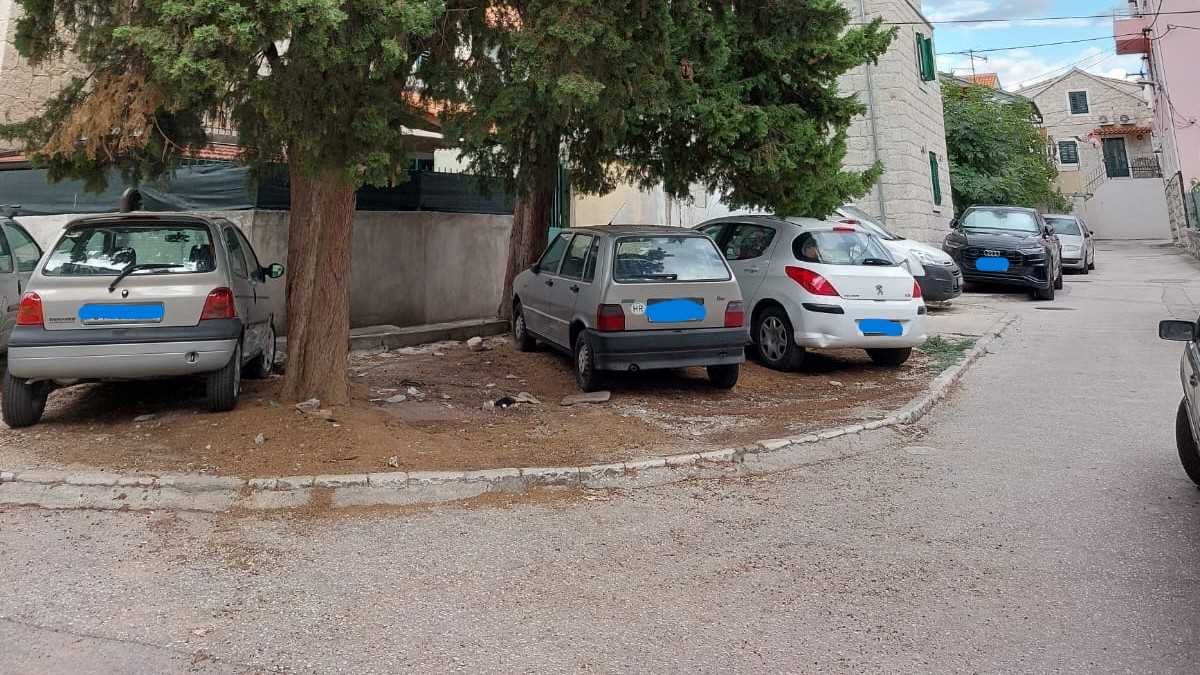
About location: How many minutes' walk to Diocletian's Palace specifically? What is below the apartment? What is the area like at night in high season? Is the building located in an alley or on the main road (This matters even more for those who rent a car. But driving in Split or Croatia deserves another blog of itself)?
About size: What is the exact size in square metres? Have I stayed in a space this size before, and was I comfortable? How many people are we, and how much luggage are we bringing? Where will we unpack?
About noise: Am I a light sleeper? Is the accommodation inside or near the Palace walls? Are there bars, restaurants or concert venues nearby?
About sea views: What floor is it on? Is there a lift? Am I physically comfortable climbing those stairs regularly?
About amenities: Am I specifically attached to having a pool, or would a five-minute walk to a sandy beach serve the same purpose? Is daily cleaning essential to my comfort, or can I manage without it?
About budget: What am I actually optimising for? If location matters most, am I prepared to pay the price for it? If budget matters most, which other attributes am I genuinely prepared to sacrifice — and have I been honest with myself about that?
A good apartment host will tell you honestly when a hotel would serve you better.
If you need a pool and the beach alternative will not satisfy you — book a hotel. If you need or want daily housekeeping without arranging or paying extra for it — book a hotel. If you are arriving very late and want guaranteed reception regardless of hour — though good hosts answer at any hour and provide self check in — a hotel may offer more peace of mind. If you are staying one or two nights and want the simplicity of a standardised experience without engaging with a host — a hotel is fine.
There are hotels in Split with pools in the city centre — five to ten minutes' walk from the Old Town. They also have gorgeous sea view and outdoor sitting area. The best of both worlds do exist in Split.
I cannot tell you how to rank your priorities. My preferences are not yours. Planning a trip is deeply personal, and if you are travelling with others — a partner, children, friends — it involves understanding not only your own priorities but theirs, and navigating the differences.
What I can say is this: the guests who leave Split happiest are almost always the ones who were honest with themselves before they arrived. They knew what mattered to them. They accepted the compromises that came with it. They did not expect the accommodation to compensate for a mismatch they chose themselves.
The guests who leave unhappy are rarely unhappy because the accommodation was bad. They are unhappy because they chose the wrong accommodation for who they are — and sometimes, because they did not yet know who they are as travellers.
That knowledge comes with experience. It also comes with asking the right questions before you book, rather than discovering the answers after you arrive.
Valeria Teo has lived in Split's Radunica neighbourhood for over 15 years and holds Croatian citizenship. She operates 3 Flowers Holiday Rentals — rooms and apartments in central Split, all within walking distance of Diocletian's Palace, Bačvice Beach and the ferry port. If you have questions about whether our accommodation is the right fit for your trip, ask before you book — she would rather help you choose correctly than have you arrive with the wrong expectations. threeflowerssplit.com