Every summer, I have the same two conversations at check-in.
The first goes something like this. A guest arrives, slightly dazed from research overload. They have read about Hvar, Brač, Vis, Šolta, Korčula, the Blue Cave, the Blue Lagoon, Stiniva beach, Zlatni Rat, the Green Cave, the Pakleni Islands. They have seventeen browser tabs open. They have three days. They look at me and say, not quite as a question: "I was thinking of maybe doing... all of it?"
The second conversation is different. A guest arrives knowing exactly what they want, which is everything, simultaneously, tomorrow. They want to see the Blue Cave in the morning, have lunch in Hvar town, swim at Stiniva in the afternoon, visit a winery, and be back in Split for a 9pm dinner reservation. They show me a hand-drawn itinerary. It is optimistic in the way that only someone who has never missed a Croatian ferry can be optimistic.
Both conversations end the same way: with me gently, firmly, and sometimes quite directly, saying: let's talk about what's actually possible.
The word "hopping" implies lightness, spontaneity, effortless movement from one beautiful place to another. The reality is that islands are separated by water, and water takes time to cross.
A fast catamaran from Split to Hvar takes about an hour. A car ferry takes longer. Getting from Hvar to Vis is another journey. Getting from Vis to the Blue Cave, which is actually on the island of Biševo, is another boat ride on top of that. By the time you have travelled to three islands in sequence, looked at each one briefly, and travelled back, you have spent most of your day on a boat and most of your money on tickets — and you have seen everything and experienced nothing.
This is exactly why organised day tours exist. They are not a tourist trap. They are a logistics solution built by people who understand that most visitors have limited time and genuinely want to see more than one place. A well-run full-day tour from Split can take you to the Blue Cave, Hvar, and the Pakleni Islands in a single day — because the operator has solved the timetable problem for you, the boat goes where you need to go, and you don't have to think about ferry connections.
When does DIY make more sense? When you want depth rather than breadth. One island, properly. A full day on Vis — walking the town, finding your own restaurant, swimming at Stiniva without a tour group — is a completely different experience from forty-five minutes there as part of a five-stop itinerary. The local foot-passenger catamarans and car ferries that leave from Split harbour are your tools for that kind of trip. Jadrolinija, Krilo, TP-Line. Buy tickets on their apps a day in advance in peak season. Go to one island. Stay as long as you want. Come back when you're ready.
The choice between organised tour and DIY ferry is really a question of what you're optimising for: variety or depth. Neither is wrong. But you need to decide before you book, not while you're standing on the dock.
For someone who has spent their life in a city — or anywhere landlocked, or anywhere that isn't an island — the prospect of a week on a Croatian island sounds like pure paradise. The photos confirm it: turquoise water, stone villages, bougainvillea, fishing boats, the smell of the sea.
All of that is real. And for the first two or three days, it is genuinely magical.
Then comes the quiet.
Croatian islands are, outside of summer, genuinely isolated places. The permanent population of many of them is small. There are no department stores, no cinemas, no museums of significance, no nightlife in any meaningful sense except in the most touristed corners of Hvar. What there is: the sea, the sun, local restaurants, a handful of bars, and time. A great deal of time.
In summer, tourists and vacationers fill the gap — there are boat trips, scuba diving, seasonal events, beach bars, organised excursions. If you know what you're there for, it is wonderful. But if you arrive expecting the pace and stimulation of a city holiday wrapped in a beautiful natural setting, you will find yourself restless by day four and counting the days until you can get back to a place where things happen.
I have received guests who spent a week on one of the islands and then came to stay with me in Split for a few days before flying home. Their ostensible reason was logistics. Their real reason, which they admitted once they had slept in a place with restaurants on the doorstep and people walking past the window, was that they needed to decompress from the island.
This is not a failure of the island. It is a mismatch between what the person expected and what the place actually offers. The island delivered exactly what it was: peaceful, slow, beautiful, and very, very quiet.
I should say something about time, because it behaves differently out there.
On any Croatian island, time seems to slow to a different frequency. Everything moves at half speed. Lunch takes three hours not because the service is slow but because nobody is in any particular hurry and the sea is right there and the wine is local and there is simply no compelling reason to finish. The afternoon dissolves. The evening arrives without announcement. You realise at some point that you have done almost nothing all day and feel entirely at peace with this.
For some people, this is exactly what they need. They arrive depleted from a year of city life and deadlines and notifications, and the island gives them back something they didn't know they had lost. They leave restored.
For others, the slowness becomes its own kind of pressure. The absence of stimulation feels like emptiness. They are the ones who book every available excursion, not because they particularly want to go scuba diving, but because doing something feels better than doing nothing.
Neither response is wrong. They just tell you something about what you actually need from a holiday, which is more useful information than any travel guide can provide.
I want to say something that sounds harsh but is actually, I think, kind.
Every season, I speak to guests who didn't enjoy somewhere they visited. Split is too crowded. The island was too quiet. Dubrovnik was too expensive. The national park was too far. The food wasn't what they expected.
Some of these complaints are legitimate. But many of them are really about a mismatch — between what the person wanted and what the place was always going to offer. The place didn't fail them. They chose the wrong place for who they are.
I have never been to the United States. This is not an oversight. I have thought about it, and what I understand about myself as a traveller is that I am drawn to history, to age, to layers of time visible in stone and street and language. I love a place that has been living for a long time and shows it. The United States has extraordinary natural beauty and, I am sure, charming small towns that I would enjoy. But it is, in historical terms, a young country. That is not a criticism. It is simply not what I am looking for.
I don't particularly like large cities either. Hong Kong is one of the great cities of the world, and I left it without much difficulty. Not because there was anything wrong with it, but because it was not, in the end, what I needed.
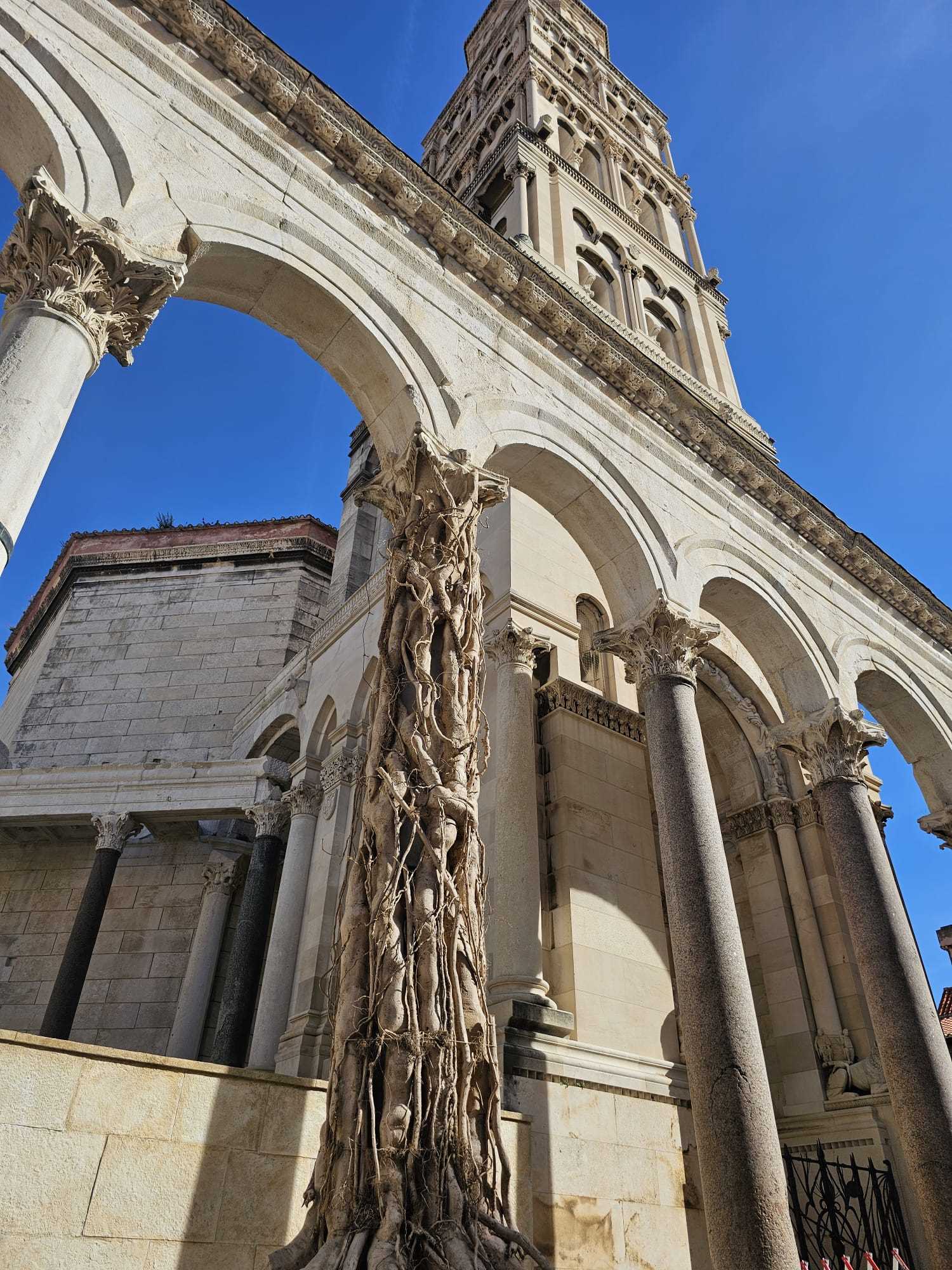
What I needed, it turned out, was Split. A city that has been continuously inhabited for seventeen centuries. A city where a Roman emperor's retirement palace became a medieval neighbourhood became a living city centre that people still argue and laugh and hang laundry in. A city small enough to walk across but layered enough to spend years discovering. A city with the sea at the end of every street.
That is a very specific set of preferences. They are mine. Yours are different. The most useful thing you can do before any trip — to the Croatian islands or anywhere else — is be honest with yourself about what you actually want, rather than what sounds good in theory.
A week on a quiet island sounds wonderful. Is it wonderful for you, specifically? A packed island-hopping itinerary sounds exciting. Will you actually enjoy being in transit for six of the twelve hours? Split sounds like a good base. What are you planning to do from it, and does the reality of the place match those plans?
There are no bad trips. There are no bad places. There are only choices made without enough self-knowledge — and the mild disappointment that follows when the place turns out to be exactly what it was always going to be, just not quite what you had in mind.
When guests ask me about islands, I don't give them a list. I ask them a few questions first.
How many days do you have? What matters more — seeing several places or experiencing one properly? Do you want to be organised or spontaneous? Are you someone who needs things to do, or someone who can spend a day doing nothing by the sea and feel genuinely satisfied?
The answers to those questions determine everything else. And usually, by the time we've talked for ten minutes, the guest already knows what they want. They just needed someone to confirm it.
That is, in the end, most of what I do.
Valeria Teo has lived in Split's Radunica neighbourhood for over 15 years. She operates 3 Flowers Holiday Rentals — rooms and apartments in central Split, all within walking distance of the ferry port. If you have questions about planning your time in Split or on the islands, she's a WhatsApp message away. threeflowerssplit.com