I came to Split from Hong Kong fifteen years ago. By that point, I had spent decades in one of the world's most scam-saturated environments — a city where suspicious phone calls and fraudulent emails arrive before breakfast, where every monetary transaction comes with an instinct to ask for proof in black and white, where "words are cheap" is not a cynical observation but a practical operating principle.
Nothing prepared me for Croatia.
On one of my first visits to the Green Market in Split, I was short of cash. The vendor — a woman I had never met before — told me to take the vegetables and come back tomorrow to pay. No question asked. No hesitation. Just trust, extended to a stranger, as if it were the most natural thing in the world.
It was, for her. It wasn't, for me.
That moment encapsulates something important about how Croatian society has traditionally worked — and why the rental market, which was built on exactly that kind of trust, has become genuinely dangerous for people who don't understand the shift that has taken place.
Real estate agents do exist in Split, and people use them — particularly for longer-term rentals. But they carry a cultural reputation that is, to put it diplomatically, mixed. Many landlords and tenants prefer to avoid them if possible, not just because of distrust but because neither side wants to pay the commission. This fee aversion, combined with the traditional preference for personal referrals, means that a significant portion of the market operates informally — which is exactly the environment where scammers find room to operate.
For generations, Croatian landlords found their tenants through word of mouth. A friend of a friend. A colleague's daughter. Someone from the neighbourhood whose family everyone knew. The circle was small, the reputation system was powerful, and it worked with remarkable efficiency.
Nobody wanted to look bad among people they knew. A tenant who didn't pay, or damaged a property, or caused problems — that story travelled fast in a community where everyone was connected. And a landlord who was dishonest, or who kept deposits without cause, faced the same consequences. The mutual accountability was social rather than legal, and it held.
This system worked particularly well in Croatia because the country has a genuinely low crime rate. Scammers, in the old sense, had nowhere to hide. They were known people operating in known communities. The anonymity that fraud requires simply wasn't available.
It was a functional system. Then the internet arrived.
Online rental platforms opened the Split rental market to the world — to legitimate landlords and tenants, and to scammers who had never set foot in Croatia and never intended to.
The word-of-mouth reputation system that had protected both sides for generations became irrelevant overnight. The anonymous stranger posting a listing on Facebook or a rental forum has no community standing to lose. They operate from a distance — sometimes from another country entirely — and by the time the fraud is discovered, they are unreachable.
The trust culture that made Croatia such a warm and liveable place became, in this specific context, a vulnerability. Croatian people who find it offensive to be asked for documentation — because asking implies you're questioning someone's integrity — are operating on assumptions that no longer apply when the person on the other side of the screen is unknown, unaccountable, and potentially not even in the country.
Foreign tenants, particularly students arriving for an Erasmus semester, step into this environment with almost no preparation. They don't know what the market looks like. They don't know what a legitimate rental arrangement involves. They are often under pressure to secure accommodation before they arrive, which creates exactly the urgency that scammers depend on. And they arrive from countries and cultures with their own assumptions about how trust and transactions work — assumptions that may not serve them here.
I want to be specific, because vague warnings are less useful than concrete descriptions of what to look for.
The fake listing. A property is advertised at a price that seems remarkably good for central Split. The photos are attractive. The landlord — who communicates only online, never in person — asks for a deposit to hold the apartment. The apartment either doesn't exist, or the photos belong to a real property that the scammer has nothing to do with. The deposit disappears.
The fake current tenant. This one is particularly sophisticated because it exploits Croatian rental culture directly. A post appears — often in a Facebook group for students or expats — from someone claiming to be the current tenant of a lovely apartment. They are moving out soon, they say, and they are helping the landlord find a replacement tenant. The landlord is busy, or abroad, or otherwise unavailable to deal with enquiries directly. Could you transfer a holding deposit while they sort out the details?
This scam works because finding accommodation through a trusted referral — through someone who has already rented there — is exactly how the legitimate Croatian rental market has always operated. The scammer has studied the culture and built a fake version of its most trusted mechanism. It is, in its way, impressive. It is also extremely effective.
The Airbnb trick. This is the most recent evolution, and the most audacious. The scammer rents an Airbnb for a few days — legitimately, as a guest. During that time, they show the apartment to prospective tenants as if it were their own property. They collect a deposit. They provide a lease contract. Everything looks real because the apartment is real — the scammer is physically present in it, they can show it in person, they have keys.
On the day the new tenant arrives with their luggage, they discover that another Airbnb guest is already staying there. The scammer is gone. The deposit is gone. The actual owner of the apartment has no idea any of this happened until the tenant arrives at their door in distress.
There is no defence against this scam that is completely reliable. Professional scammers are genuinely skilled, and this one is designed specifically to defeat the precautions that most advice columns recommend.
You will read, repeatedly, in rental groups and student forums: never transfer money before you have seen the apartment in person and are completely certain.
This advice is correct as far as it goes. But it contains an implicit assumption that legitimate landlords will wait indefinitely for a tenant to arrive, view, decide, and commit — without any financial commitment from the tenant's side.
They won't. And they shouldn't have to.
A legitimate landlord with a desirable apartment in central Split, available from October, has other enquiries. Holding that apartment for a student who might arrive in September, might decide they don't like it, might find something else in the meantime — without any deposit — is not a reasonable expectation. It is not how any functioning rental market works.
When I rent to a tenant, I require one month's rent as a deposit before holding the apartment. This is standard. Local Croatian tenants pay it. International tenants pay it. It is not a red flag — it is a basic and entirely reasonable condition.
The tension here is real and I won't pretend otherwise. A legitimate landlord needs a deposit. A scammer also asks for a deposit. The deposit requirement alone cannot tell you which one you are dealing with.
What can tell you is everything else around it.
In Croatia, legitimate rental operations are registered and documented. Here is what you should expect from any landlord operating legally:
OIB number. Every Croatian company and individual taxpayer has an OIB — a personal identification number. A legitimate landlord will have one. Ask for it. You can verify it.
A word of caution: asking for a Croatian ID card is not the protection it might seem. There are documented cases of scammers presenting fake Croatian ID documents. A physical card is relatively easy to counterfeit. An OIB number that you can independently verify against public property records is significantly harder to fake — which is why I recommend verifying the OIB rather than relying on ID alone.
Ownership documents. The landlord should be able to show you documentation proving they own the property — or that they have authorisation from the owner to rent it. These documents are public records in Croatia. Anyone can look them up. If you are not familiar with how to do this, ask someone who is, or ask the landlord to show you directly.
A signed lease agreement in English. If you don't read Croatian, your contract should be in a language you understand. A legitimate landlord renting to international tenants will have this. Read it before you sign anything or transfer any money.
Receipts for every payment. Every deposit, every rent payment, every additional charge should come with a receipt. If a landlord is reluctant to provide receipts, that is a significant warning sign.
Verifiable reviews. Not just on the platform where you found them, but ideally on independent platforms — Google, Booking.com, Airbnb. A landlord with a history of legitimate guests has a trail. A scammer doesn't.
I provide all of these documents proactively, without being asked. Not because I expect to be suspected — but because I have nothing to hide, because the documents are already public record, and because clarity now prevents misunderstanding later. A landlord who is reluctant to provide documentation when asked has given you important information.
Despite everything I've described, the most reliable protection in the Split rental market remains what it has always been: a personal referral from someone who has actually rented from that landlord.
If you know someone — a friend, a classmate from a previous semester, anyone with a direct experience — who rented from a specific landlord and can vouch for them, that is worth more than any documentation. It is the original system, and it still works.
The challenge for most Erasmus students is that this connection is difficult to find. You are arriving somewhere new, without an established network, often for the first time. The referral network that protects local tenants is not easily accessible to you.
This is why the scammers who impersonate current tenants are so effective. They have identified the most trusted channel in the market and built a fake version of it. By the time you realise the referral wasn't real, the damage is done.
I cannot give you a method that completely eliminates the risk of being scammed. Professional scammers adapt continuously — the Airbnb trick I described emerged because earlier precautions made it necessary for them to evolve. Whatever precautions become standard practice today, there will be a new variation tomorrow.
The basic requirements for now: ask for the OIB. Ask for ownership documents. Ask for a proper lease contract in a language you understand. Ask for receipts. Read the reviews on independent platforms. But individual documents will eventually be forged. The real protection is cross-referencing: an OIB that matches the ownership papers, that matches the company registration, that matches years of verified guest reviews on independent platforms. Fabricating one document is possible. Fabricating a consistent identity across multiple independent sources simultaneously is significantly harder. Verify everything, and verify it from sources the landlord doesn't control.
At the same time, information helps, even when it isn't perfect protection. A tenant who understands what legitimate documentation looks like, who knows what questions to ask, who recognises the patterns of common scams, is harder to deceive than one who doesn't. If a price seems too good for central Split, treat that as information rather than luck.
And if a landlord is offended by being asked for documentation — if they suggest that asking implies distrust, or that a good-faith person wouldn't need to see papers — understand that this reaction, however culturally genuine it may be, does not protect you. Trust is valuable. Documents are also valuable. In an environment where scammers operate professionally and at scale, the two are not in conflict.
In Hong Kong, we say: black and white. Get it in writing. It isn't cynicism. It's survival.
One last thought that most rental guides don't say plainly enough: scammers put serious time and effort into perfecting their frauds. A fake listing, a forged document, a convincing back-story — these take work to construct. If you put in less effort verifying than the scammer put in deceiving, the odds are not in your favour. No pain, no gain applies here as much as anywhere. The tenants who don't get scammed are usually the ones who did the unglamorous, time-consuming work of checking everything properly — not the ones who hoped a quick look would be sufficient.
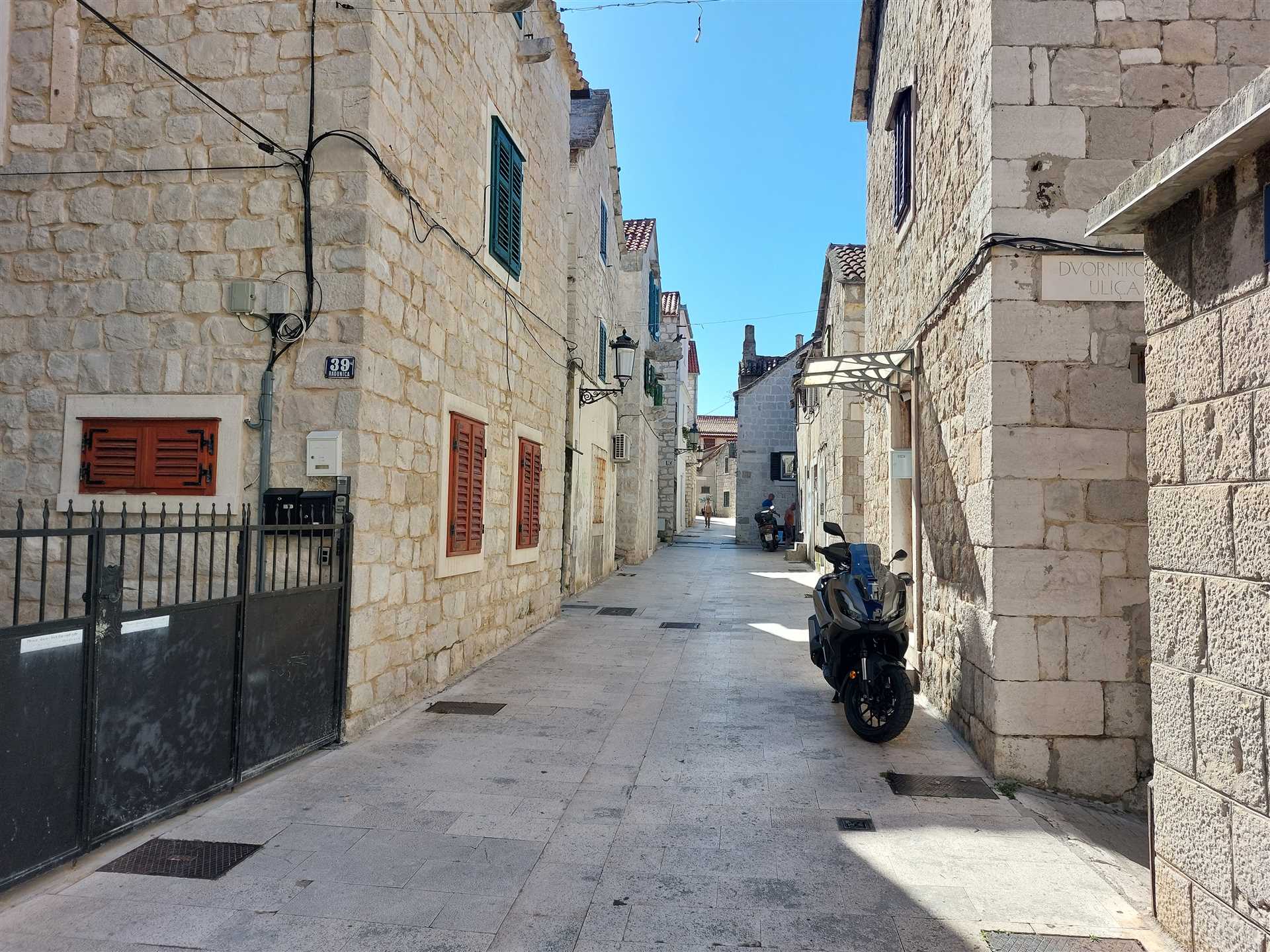
Valeria Teo is a Hong Kong native and Croatian citizen who has lived in Radunica, Split since 2011. She operates 3 Flowers Holiday Rentals — rooms and apartments in central Split. This post was written to be useful to anyone renting in Split, regardless of where they stay. If you have questions about the rental market or are looking for mid-term accommodation, you're welcome to get in touch at threeflowerssplit.com