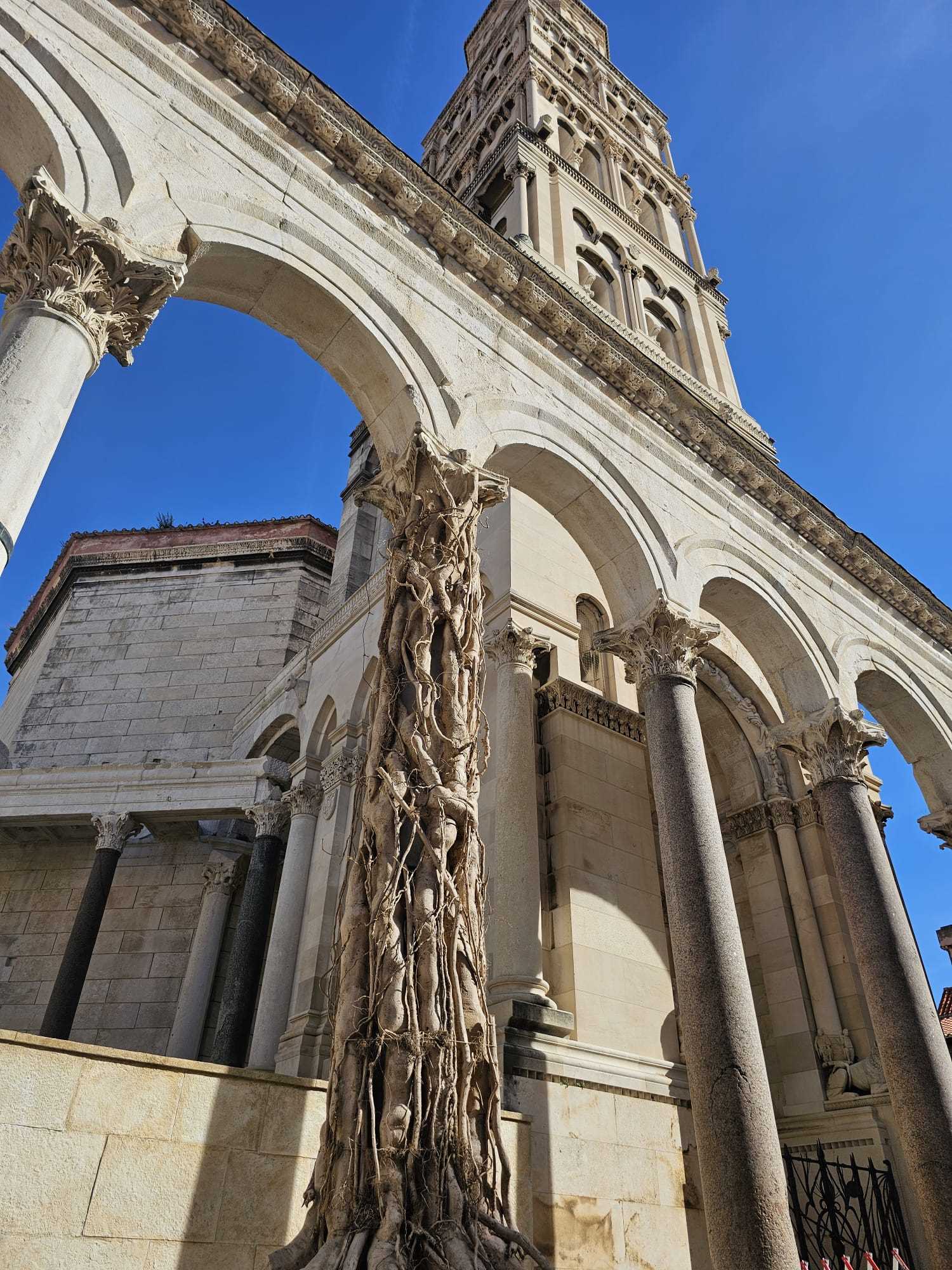
The Diocletian Palace gets all the attention, and rightly so — it is, after all, one of the best-preserved Roman palaces in the world, and a UNESCO World Heritage Site that people still live and work inside. But it is also the first and almost only thing most visitors see of Split's cultural life. It is a shame, because the city has a great deal more going on if you're willing to walk a little further or look a little closer.
This is for guests who told me, during check-in, that they didn't care much about beaches or boat trips. They wanted to know about art, history and architecture in a city with more than 1700 years of human activities. It's a longer answer than I usually have time to give in person, so here it is properly.
I should be honest from the start: this is not a neutral recommendation. After fifteen years here, the Meštrović Gallery remains the place I'd take a visitor if I could only choose one.
Ivan Meštrović was Croatia's most significant sculptor of the twentieth century, and in 1931 he designed and built this neoclassical villa himself as a combined home, studio and exhibition space. The terraced Mediterranean garden alone — large bronze sculptures placed among cypress trees with the Adriatic and the islands visible beyond — is worth the visit before you've even stepped through the door. Inside, over 190 of his works in bronze, marble and wood span his entire career, from intimate religious pieces to monumental human figures.
A short walk away is the part that affects me most: a small chapel complex called Crikvine-Kaštilac. Meštrović restored a ruined 16th-century fortified estate that had belonged to the Capogrosso family. He installed twenty-eight wood relief carvings between 1917 and 1950 inside the church he built there. The collection depicting the life of Christ was created with an emotional and spiritual intensity I haven't seen matched anywhere else. It comes as no surprise that this chapel, together with the courtyard, is a local favourite for weddings.
Another detail that moves me is in the naming. The place became popularly known as "Kaštelet," and Meštrović specifically and repeatedly objected to this. In a 1955 letter, he wrote that he hadn't built it as a monument to himself but as a small endowment for ordinary Croatian people, in the spirit of their own religious traditions. He insisted on "Crikvine" instead — an old Croatian word essentially meaning "the remains of old churches" — precisely because he didn't want his own name attached to it. He was, by his own account, faintly irritated that people would rather call it after a noble family's old castle than after what he had actually intended it to be: a humble gift, not a monument to a famous sculptor. A combined ticket covers both the gallery and the chapel, and I'd genuinely advise against seeing one without the other.
If your visit happens to fall in the last week of June, the gallery grounds host Melodije Jadrana, several evenings of major Croatian and Dalmatian music performed live in that same garden setting. It's a striking contrast to the gallery's usual daytime quiet, and it only happens once a year.
Split's Archaeological Museum doesn't get nearly the visitor numbers its collection deserves, possibly because "archaeology museum" sounds like homework. It isn't.
The museum's primary collections cover prehistoric, Greek-Hellenistic, Roman provincial, late antiquity and medieval material from across the wider region — but its most distinctive holding is a dedicated underwater archaeology collection, recovered from shipwrecks along the Adriatic coast. The sea around Split and the islands has been a trade route for over two thousand years, and a remarkable amount of what sank in that time has been found again.
The museum also manages two archaeological sites outside the city itself: Salona, the ancient Roman capital of the province of Dalmatia and one of the largest Roman archaeological sites in this part of Europe, and Issa, the site of an ancient Greek colony on the island of Vis.
As of June 2026, the museum's main exhibition space has been temporarily given over to a special show: "DELMATAE — Between Myth and Reality," described as one of the most anticipated archaeological exhibitions in Croatia this year, running until 31 October 2026. It tells the story of the Illyrian Delmatae tribe — the people who gave Dalmatia its name — and has drawn what the museum itself called an "unprecedented" level of public interest at its opening.
On Narodni trg (known locally as "Pjaca"), in the heart of the Old Town, the Old City Hall hosts a changing programme of exhibitions organised by the Split City Museum. This is genuinely worth checking whenever you're in town, because it's never the same thing twice.
Last year's exhibition covered treasures and artefacts recovered from shipwrecks along the Adriatic coast — a fitting companion piece to the Archaeological Museum's own underwater collection, though run independently. As of mid-2026, the space is showing a retrospective of the Croatian painter Stipe Nobilo, marking the 80th anniversary of his birth and 50 years since his first major solo exhibition. It runs through 26 July 2026.
The point isn't the specific show — it's the habit. If you're the kind of traveller who likes wandering into a building because something is on, the Old City Hall is the place to check first. Opening hours are generally 9am to 8pm, and entry to these exhibitions is typically free.
If the museums above cover history and tradition, PROSTOR covers what's happening right now. It's an independent creative hub run by Culture Hub Croatia, located at Plančićeva 2 in the city centre, open weekdays 10am to 7pm.
PROSTOR runs a genuine contemporary exhibition programme alongside an artist residency, meaning the people showing work there are often physically present in the building, sometimes mid-project. It's a small, unglamorous, entirely real space — the kind of place a museum gift shop will never replicate, and exactly what an artist or design-minded traveller is usually looking for when they ask me, slightly apologetically, if Split has "anything more contemporary."
It does. You just have to know to look for it, because it doesn't advertise itself the way the Palace does.
PROSTOR also runs a regular programme of workshops — useful to know if you'd rather make something during your holiday than only look at what other people have made. Their calendar changes through the year, so it's worth checking shortly before you arrive rather than months in advance.
It isn't the only place offering this. Several local studios run summer workshops aimed at both residents and visitors — I know because my son has been attending one every summer. If creating something with your hands is part of what you're after, ask your host for the latest information.
For cultural events beyond museums and galleries — concerts, theatre, comedy, conferences, the occasional tribute act — Entrio is the ticketing platform most Croatian organisers actually use, with a working English-language version of the site.
A fair amount of what's listed will require some understanding of Croatian, simply because most events here are made for a Croatian audience first. But there is always something accessible to an English-speaking visitor if you look — tribute concerts, international acts on tour, and large-scale productions tend to transcend the language question entirely. An Entrio search for Split on the dates you're visiting takes a few minutes and occasionally turns up something genuinely worth rearranging an evening for.
For a more traditional museum experience, the Museum of Fine Arts (Galerija umjetnina) is housed in a beautifully restored 18th-century former hospital building and holds over 5,200 works spanning the 14th century to the present — Croatian and European, medieval icons through to contemporary video art. It is, almost without exception, quiet — several visitors have remarked on having entire galleries to themselves even in peak season, which is its own kind of luxury if you've just come from the Palace's crowds.
The Emanuel Vidović Gallery, near the Silver Gate, is dedicated to one of Split's most celebrated painters and his vivid, atmospheric depictions of Dalmatian landscapes and everyday life — a smaller, quieter stop, but a meaningful one if Vidović's name keeps appearing in the Museum of Fine Arts collection and you want to see more.
Diocletian's Palace is the obvious architectural case study in Split — a Roman structure continuously inhabited and adapted for over 1,700 years, with new buildings constructed into and around the old ones at every point in that history. Walking through it with that fact in mind, rather than as a backdrop for photographs, changes what you notice. The cathedral bell tower built directly onto a Roman mausoleum. The medieval houses with Roman columns embedded in their walls because the stone was already there and nobody saw a reason to waste it.
For a contemporary counterpoint, the 2025 redevelopment of Žnjan beach on the city's eastern coastline — a deliberate, large-scale piece of public urban design — is worth a look even if you have no interest in the beach itself. Seeing the instinct behind both, separated by two thousand years, says something about how this city has always thought about its own space.
None of this requires you to be an art historian or to have any particular expertise. It requires only the willingness to walk past the Palace once you've seen it, and to treat "what else is here" as a real question rather than a rhetorical one.
I've hosted artists, architects, and people who simply prefer a quiet gallery to a crowded beach, and the conversation is always the same: they didn't know any of this existed before they asked, and they were glad they did.
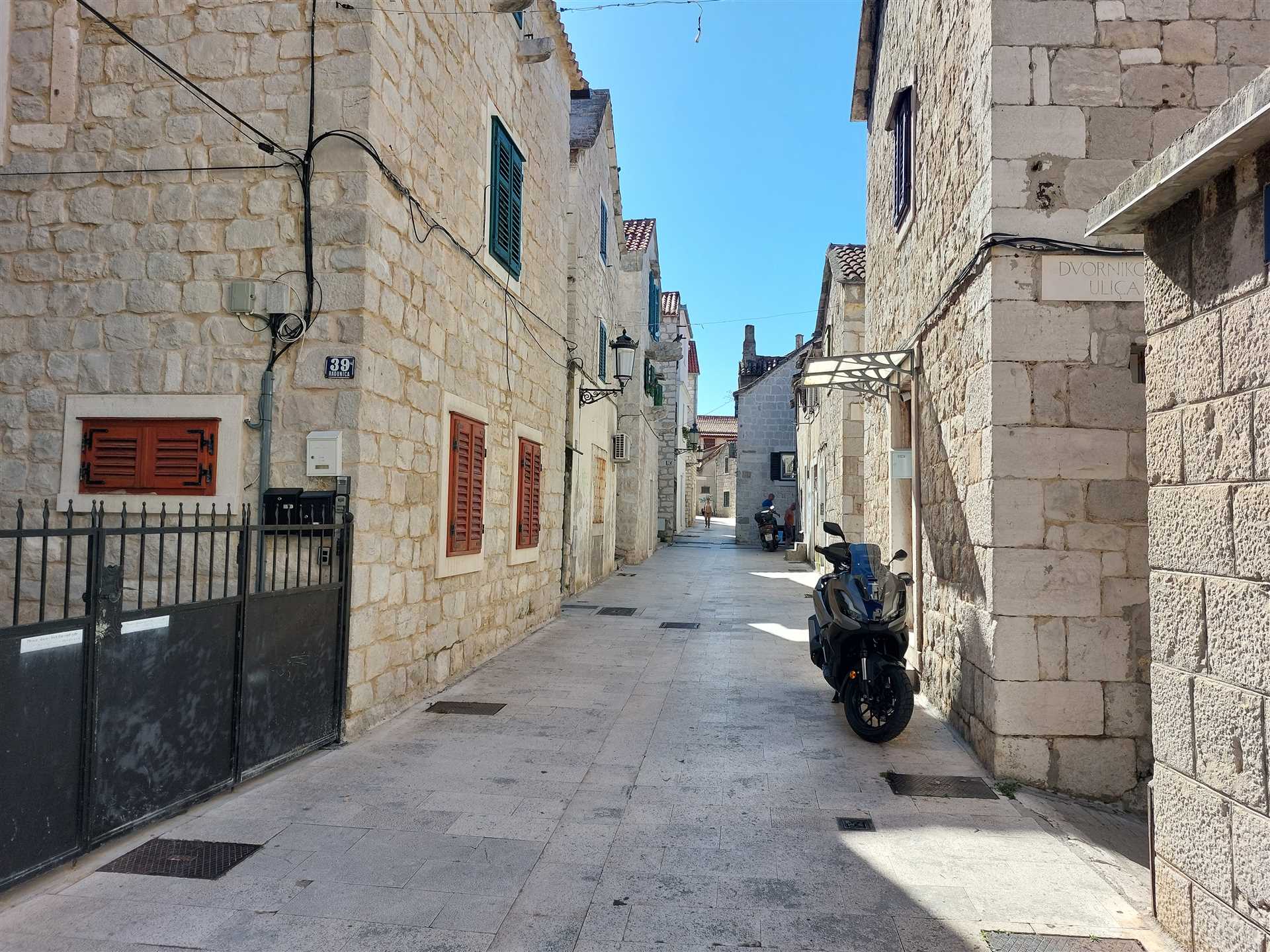
Valeria Teo has lived in Split's Radunica neighbourhood for over 15 years and holds Croatian citizenship. She operates 3 Flowers Holiday Rentals — rooms and apartments in central Split, all within walking distance of Diocletian's Palace, Bačvice Beach and the ferry port. If art, history or architecture is what brought you to Split, she's happy to point you toward whatever's currently on. threeflowerssplit.com